
Best Exterior Paint Types for Toronto Weather

Last Updated: November 12, 2026
Quick Summary
The best exterior paint types for Toronto weather are 100% acrylic for most homes, elastomeric coatings for stucco or masonry with hairline cracks, and alkyd for metal and trim. Freeze-thaw cycles, sun and moisture all demand a flexible, water-resistant film with good adhesion.
100% acrylic stays flexible through cold snaps, so it moves with the substrate instead of cracking.
Elastomeric coatings stretch the most and bridge hairline cracks in stucco and masonry.
Alkyd bonds well to sound trim and metal but becomes brittle as it ages.
Fix caulking and sealant gaps before painting, since water entering at joints drives most freeze-thaw damage.
Check the label for minimum application temperature and apply in dry weather before the first hard freeze.
Which exterior paint suits your home?
Scarlett Painting Inc matches paint systems to Toronto exposure, surfaces and finish goals.
Table of Contents
Why Toronto Weather Is Hard on Exterior Paint
Toronto's exterior paint faces a harder year than most Canadian homes realize. Summers bring sustained sun and humidity, winters bring snow and temperatures that swing well below freezing, and spring and fall add rain and daily freeze-thaw cycles. Choosing the best exterior paint types for Toronto weather conditions starts with understanding these forces. Common failures on exterior walls include peeling on south-facing walls, blistering after a wet spring, and chalking where UV has broken down the binder.
Paint is a film, and that film has to flex as the substrate expands and contracts. Each freeze-thaw cycle moves moisture into tiny gaps, then pushes it out again. Over time, that movement breaks the bond between paint and surface. The result is cracking, flaking and water entering behind the coating.
Sun adds a second problem. UV breaks down pigments and resins, which leads to fading and chalky surfaces. Darker colours absorb more heat, so they expand and contract more, which adds stress to the film.
Best Exterior Paint Types for Toronto Weather Conditions: A Comparison Table
Most exterior coatings used on homes here fall into four broad groups: 100% acrylic, acrylic latex blends, alkyd (oil-based) and elastomeric. The table below compares them on the criteria that matter most in this climate, and the notes underneath explain the trade-offs so you can pick beyond a generic acrylic recommendation.
Paint Type | Freeze-Thaw Flexibility | Breathability (moisture vapor escape) | Adhesion on Chalky or Damp Surfaces | UV and Colour Retention | Best Use | Main Drawback |
100% acrylic | Good | Good | Good with primer | Good | Wood, fibre cement, stucco | Higher upfront cost |
Acrylic latex blend | Fair | Fair | Fair | Fair | Lower-exposure walls | Shorter lifespan in harsh exposure |
Alkyd (oil-based) | Fair, can become brittle | Poor | Good on sound trim | Fair, yellows over time | Trim and metal | Slower drying, stronger odour |
Elastomeric | Very good | Low to moderate | Good on sound masonry | Good | Stucco and masonry with hairline cracks | Thick film, harder to apply |
The trade-offs that actually decide the job
Flexibility vs breathability. Elastomeric coatings stretch the most, which is why they bridge hairline cracks in stucco and masonry. That same thick film breathes less than a thin acrylic, so it is a poor match for a wall that stays damp from the inside. A 100% acrylic sits in the middle: flexible enough to move with seasonal expansion, breathable enough to let trapped vapor escape.
Adhesion vs surface condition. Alkyd bonds hard to sound trim and metal, but it does not adhere well over chalky or damp surfaces and it becomes brittle as it ages. Acrylic adheres well to most substrates provided the surface is clean and primed. No coating compensates for a chalky, dusty or wet wall.
Durability vs cost. A 100% acrylic usually carries a higher upfront price, but it holds colour and resists moisture longer than a blend. A blend costs less at the start and is a reasonable choice on a sheltered wall that sees little direct sun or driving rain.
Colour and heat. Darker colours absorb more heat, expand and contract more, and put extra stress on the film. On a south- or west-facing wall, a darker colour in a less flexible coating is a common recipe for early cracking.
How to choose in practice
Identify the substrate first (wood, masonry, stucco, metal).
Note the exposure: full sun, prevailing rain, snow accumulation, or shelter.
Match the coating to both, then confirm the product label states exterior flexibility and moisture resistance.
Use a quality primer on bare or chalky surfaces regardless of topcoat.
Watch out: a premium coating applied over a damp, chalky or poorly primed surface will still fail early, so surface condition matters as much as the paint type.
100% Acrylic Exterior Paint: Performance in Cold, Wet Conditions
A 100% acrylic exterior paint is usually the strongest all-round choice for Toronto. Its resin stays flexible through cold snaps, which means it moves with the substrate instead of cracking. Acrylic also resists moisture penetration and holds colour under sustained sun.
100% acrylic is often recommended because it handles wide temperature swings. When you compare product labels, look for "100% acrylic" rather than "acrylic latex" or "vinyl acrylic," which often contain cheaper binders.
Watch out: a premium acrylic applied over a damp or poorly primed surface will still fail early. Surface condition matters as much as the paint itself.
Exterior Paint for Freeze-Thaw Cycles and Moisture Protection
Freeze-thaw damage happens when water enters the coating, freezes, expands and pushes the film off the surface. For Toronto homes, the key defence is a flexible, water-resistant film with good adhesion. Paint that bonds well and flexes will shed water instead of trapping it.
Practical steps that help:
Fix caulking and sealant gaps before painting, since water entering at joints drives most freeze-thaw damage.
Choose a paint rated for exterior use with stated flexibility and moisture resistance.
Apply in dry weather and allow the film to cure before the first hard freeze.
Moisture from rain, snow melt and humidity also feeds mildew and blistering. Paint systems that combine a quality primer with a flexible topcoat give the best protection.
Matching Paint to Siding: Wood, Masonry, Stucco and Metal
Different substrates need different approaches.
Wood siding and trim: Wood moves more than most materials. A flexible 100% acrylic over a stain-blocking primer handles seasonal movement well. Alkyd still suits trim and doors where hardness matters most.
Masonry and brick: Masonry is porous and can hold moisture. Breathable acrylic coatings are a common choice, and elastomeric coatings suit surfaces with hairline cracks.
Stucco: Stucco shows cracking over time. Elastomeric coatings bridge small cracks and resist water, though they need a skilled applicator.
Metal (eaves, railings, flashing): Metal needs a rust-inhibiting primer before any topcoat. Alkyd or a suitable acrylic topcoat works well over a properly primed surface.
Exterior Paint Temperature Range and Application Timing
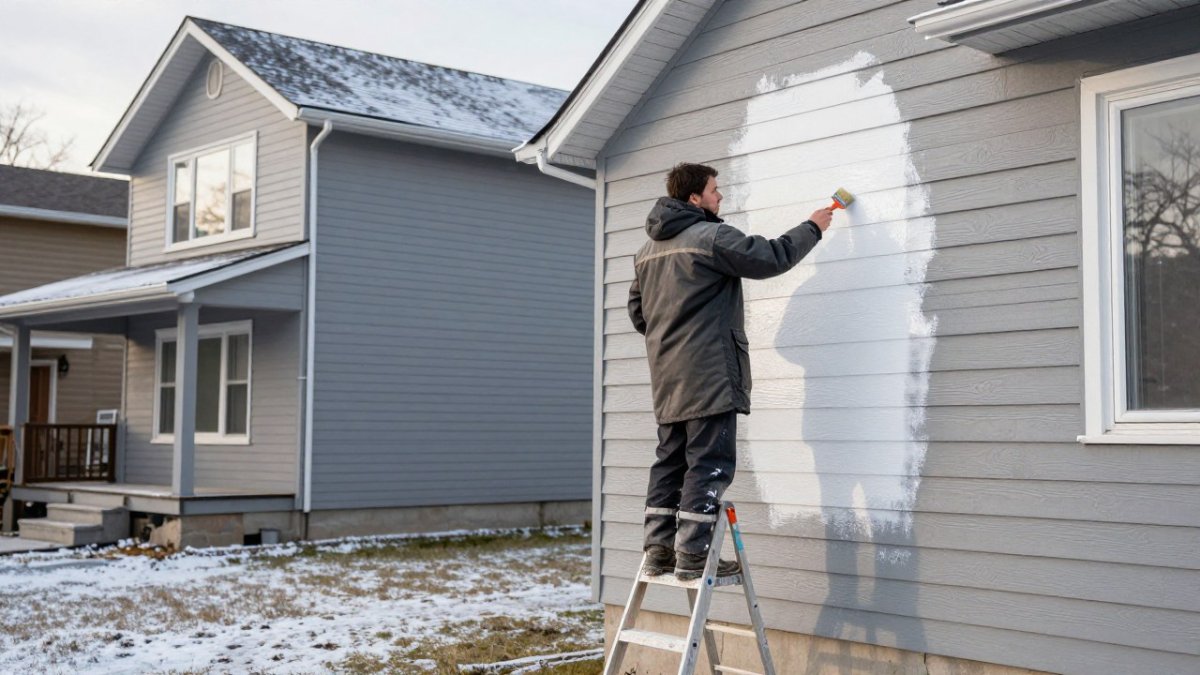
Paint manufacturers publish a minimum application temperature for their products. Check the label before you start. Applying below that range can stop the film from forming properly, even if the surface looks dry.

In the Toronto area, the practical window is usually late spring through early fall. Avoid painting when rain is forecast within the product's rain-free period, when surfaces are damp or when night temperatures are close to freezing. Morning dew and high humidity can also slow curing.
Plan so the film has time to cure before the first hard freeze. Exterior work scheduled into late fall often leaves little margin.
How Long Exterior Paint Lasts in a Toronto Climate
Exterior paint lifespan depends on the product, surface preparation and exposure, but the range is wider than most homeowners expect. A common pattern is that a well-prepared surface with a quality 100% acrylic topcoat holds up noticeably longer than a lower-grade coating applied over minimal prep, and the difference shows up first on the walls that take the most sun and weather.
What drives the interval
Exposure. South- and west-facing walls receive the most UV and heat, so they usually need attention first. North walls stay damper longer and are more prone to mildew and blistering.
Substrate movement. Wood moves more than masonry, so a flexible acrylic on wood tends to outlast a brittle film. Stucco and masonry with hairline cracks benefit from an elastomeric coating that can bridge them.
Preparation. Caulking, priming and cleaning before painting extend life more than upgrading the topcoat alone.
Coating grade. A 100% acrylic generally resists moisture and colour fade longer than an acrylic latex blend.
Maintenance that protects the interval
Inspect caulking and sealant joints each spring and re-caulk where gaps open, since water entering at joints drives most freeze-thaw damage.
Clear gutters so water does not run down and sit against walls.
Wash surfaces yearly to remove mildew and dirt that trap moisture.
Touch up chalking or fading on the most exposed walls before the film breaks down completely.
Total cost of ownership
Comparing only the price per gallon is misleading. A higher-grade coating that lasts longer can cost less per year than repainting a cheaper product every few seasons, once labor, prep and disposal are counted. The better comparison is cost per year of service, not cost per can. For a quote based on your surfaces and square footage, contact Scarlett Painting Inc. To estimate how much paint you will need, see how to calculate paint quantity for a home project.
Watch out: a wall that is repainted on schedule but never re-caulked will still take on water at the joints, so maintenance is part of the lifespan calculation, not an optional extra.
Choosing the Right Exterior Paint for Your Home in Toronto
For most Toronto homes, 100% acrylic is the strongest default. Use elastomeric on stucco or masonry with cracks, alkyd or a suitable acrylic on metal trim, and a stain-blocking primer on bare wood. Then match the finish to exposure: satin and low-lustre finishes hide surface imperfections and tend to handle weathering well, while gloss shows every flaw.
Before you hire anyone, ask for written specifications: the product name, the number of coats, and the surface preparation included. Our guide on what to look for in painters before you hire covers licensing, insurance and red flags.
Ready to choose the right coating for your property? Request a quote from Scarlett Painting Inc. You can also review current residential painting costs and trends for Toronto.
Frequently Asked Questions
What type of exterior paint is best for Toronto weather?
For Toronto's mix of freeze-thaw cycles, heavy snow, rain, and summer UV exposure, 100% acrylic exterior paint is generally the most dependable choice for most residential surfaces. It stays flexible as temperatures swing, resists moisture penetration, and holds colour well under sunlight. Surface type still matters, so the final choice should account for whether the siding is wood, masonry, stucco, or metal. A professional assessment can confirm the right product and finish for a specific home before work begins.
Is 100% acrylic paint a good choice for exterior siding?
Yes, 100% acrylic exterior paint is widely used on siding because it bonds well, remains flexible, and resists cracking and peeling as surfaces expand and contract. It performs well in cold, wet conditions when applied within the manufacturer's recommended temperature range. Acrylic also tends to retain colour better than many cheaper formulations. Prep work, including cleaning, scraping loose paint, and priming bare wood, has a large effect on how well any siding paint performs.
What exterior paint works best through freeze-thaw cycles?
Paints with good flexibility and low moisture permeability handle freeze-thaw cycles best, which is why 100% acrylic and quality latex formulations are commonly recommended for Toronto homes. Repeated freezing and thawing pushes water into tiny cracks and then expands it, so a paint that resists water intrusion and moves with the substrate lasts longer. Sealing gaps and repairing cracks before painting also reduces damage from this cycle.
What temperature is best for exterior painting?
Most exterior paints specify a minimum application temperature, and a surface temperature that is above freezing and dry. Check the product label for the exact range, since some formulations allow lower temperatures and others do not. Avoid painting when rain, dew, or frost is expected within the drying window, and plan work for stable, mild conditions in spring or early autumn in the Toronto area.
Comments